(801) 298-9190
Request Appointment
Clicking, aching, trouble chewing, or a jaw that locks? Dr. Michael Onkels treats TMJ directly, including intraoral work that most chiropractic offices do not offer.
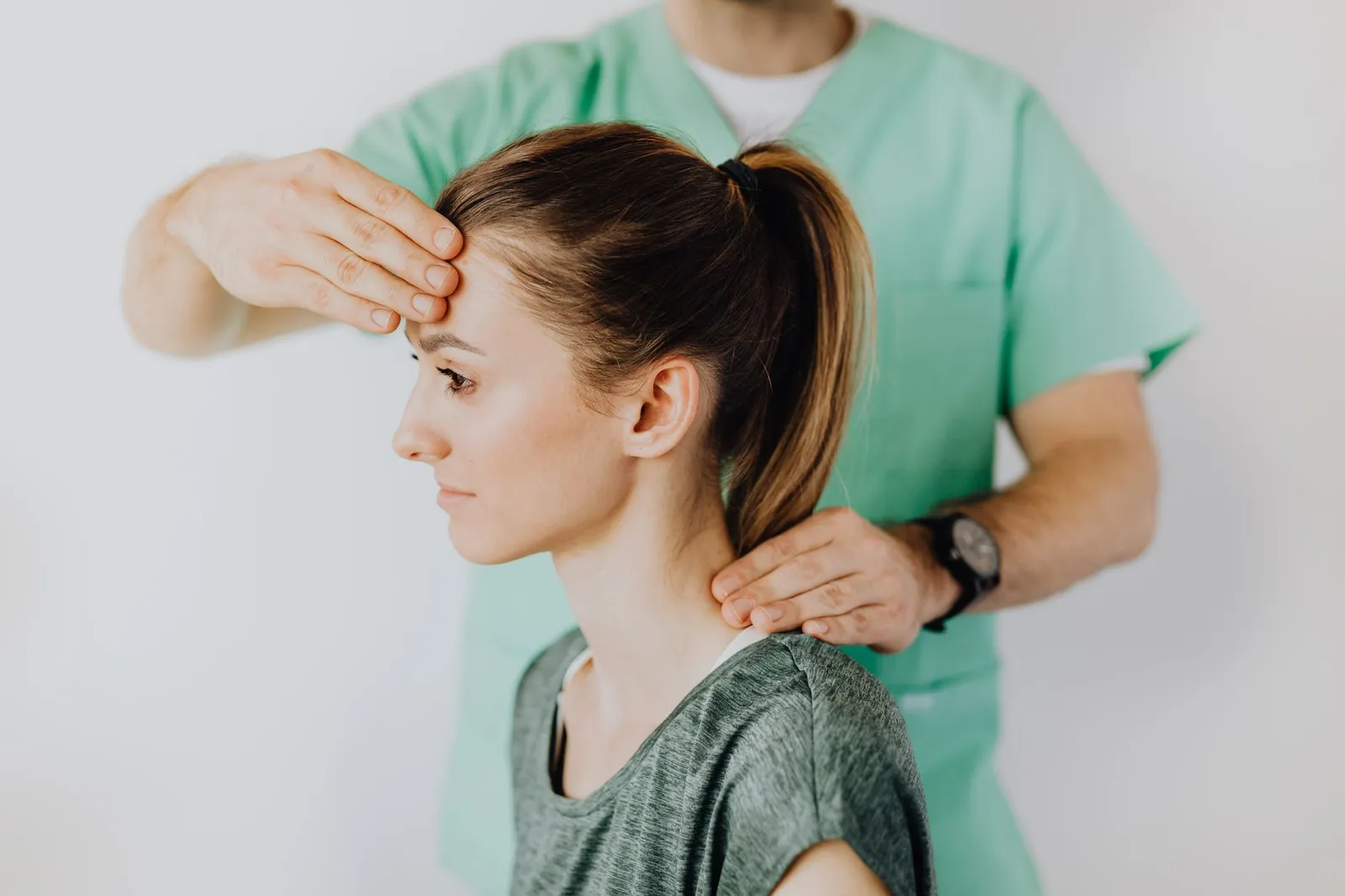
The temporomandibular joint is the hinge connecting your jaw to your skull, and you use it thousands of times a day to talk, chew, yawn, and swallow. When it stops moving properly, the effects spread. People come in describing jaw pain, but also headaches, ear fullness, facial tension, and neck pain that never quite resolves.
TMJ problems rarely exist on their own. The jaw, skull, and upper neck work as one system, so tension in the neck can drive jaw pain, and jaw dysfunction can drive headaches. Treating only one part is why a lot of people never get lasting relief.
Chiropractors are trained to evaluate and treat musculoskeletal disorders, including TMJ dysfunction. During our examination we assess the alignment and movement of the jaw joint and surrounding muscles, as well as the alignment of the neck and spine. Based on those findings we develop an individualized treatment plan to address the underlying causes. Research studies have suggested that chiropractic treatment can be effective in reducing pain and improving function in patients with TMJ dysfunction.
Some of the muscles and structures that control your jaw simply cannot be reached from outside the face. Intraoral treatment means working from inside the mouth with a gloved hand, which allows the doctor to address the joint and surrounding tissue directly and precisely.
It is a skill relatively few chiropractors offer, and it is one of the reasons patients with stubborn jaw pain end up here after trying other approaches. Dr. Michael Onkels treats jaw disc displacement directly and performs intraoral myofascial release, the soft tissue work inside the mouth that reaches muscles nothing else can. If your jaw clicks, catches, or locks, this is the kind of hands-on assessment that finds out why.
Precise treatment of the jaw joint itself, not just the muscles around it.
We treat the jaw, upper neck, and cranial structures as the connected system they are, rather than in isolation.
Low-force technique throughout. Nothing forceful, and everything explained before it happens.
Whiplash does not stop at the neck. The same forces that strain the cervical spine can affect the jaw, and because attention usually goes to the neck and back, jaw symptoms often go unmentioned and undocumented. If your jaw hurts, clicks, or feels different since your accident, say so. It can be evaluated, treated, and properly documented as part of your injury care.
Medically reviewed by Dr. Eveline Onkels, DC and Dr. Michael Onkels, DC, Onkels Chiropractic, Bountiful, Utah. This page is for general information and is not a substitute for an examination.
Yes. The jaw joint is a joint like any other, and it is closely connected to the neck and skull. Chiropractic care can address restricted motion in the jaw, tension in the surrounding muscles, and the neck and upper spine issues that often accompany TMJ pain.
Intraoral treatment means working on the jaw from inside the mouth, using a gloved hand to reach muscles and joint structures that cannot be accessed from the outside. It allows direct, precise treatment of the temporomandibular joint, and relatively few chiropractors offer it.
Yes. We receive referrals from dentists and orthodontists for TMJ cases, and we are glad to coordinate with the dental side of your care where that helps.
TMJ refers to the temporomandibular joint itself, the hinge connecting your jaw to your skull. TMD, or temporomandibular disorder, is the clinical term for problems affecting that joint. Most people use TMJ to describe both.
Common signs include jaw pain or tenderness, clicking or popping when you open your mouth, difficulty chewing, jaw locking, headaches, ear pain or fullness, and tension through the face, neck, and temples.
Yes. Jaw pain is a common but frequently overlooked consequence of a collision, particularly with whiplash. If you have jaw symptoms after an accident, tell your doctor so it can be evaluated and documented.
Call us now or send a message. If you reach us after hours, we will get back to you the next business day.
Fill this out and we will contact you as soon as possible.