
(801) 298-9190
Request Appointment
A low force approach that uses your own body weight and gravity to restore balance between the pelvis and the base of the skull.
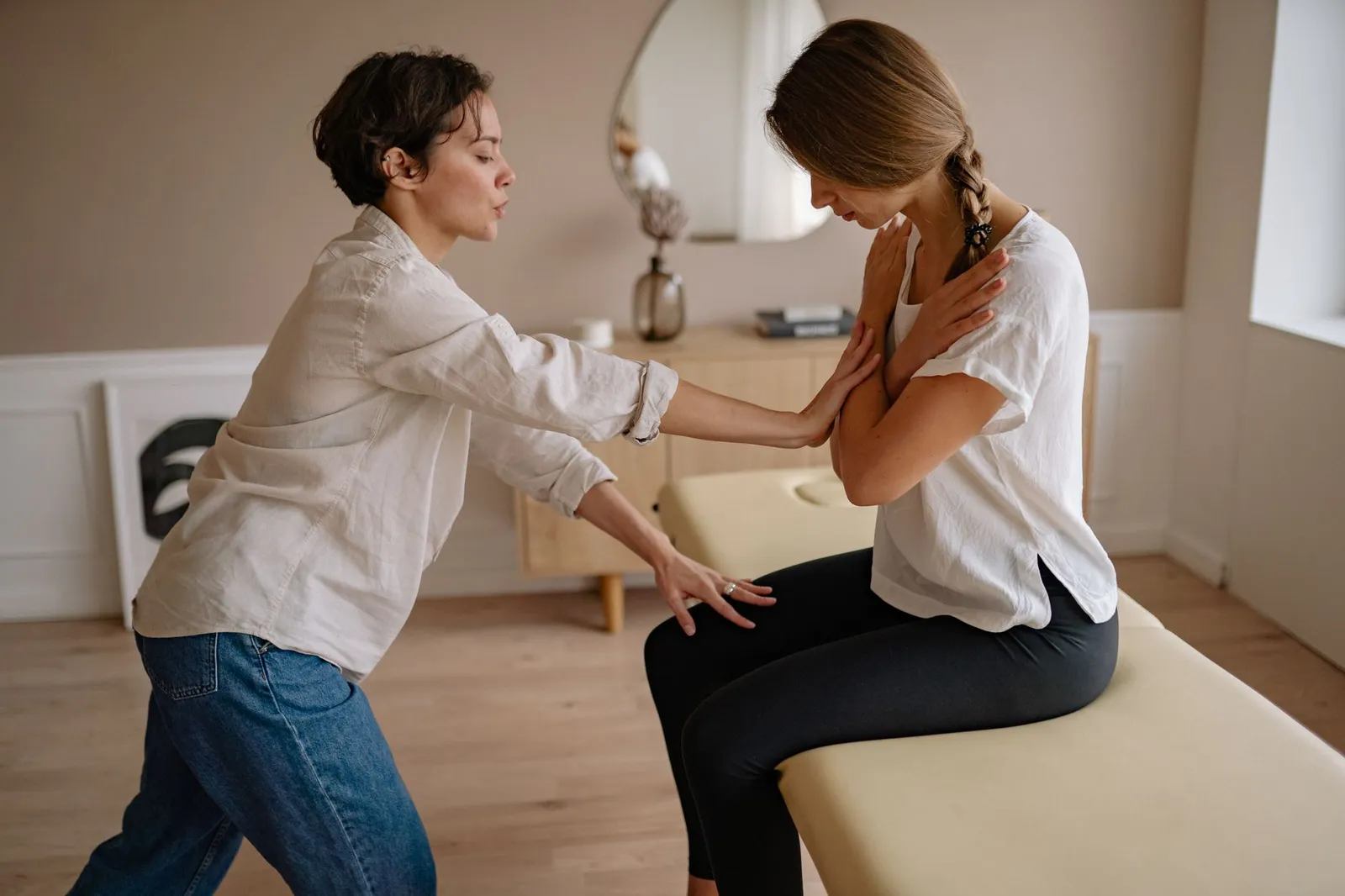
Sacral Occipital Technique, usually shortened to S.O.T., is built around the relationship between the sacrum at the base of your spine and the occiput at the base of your skull. Those two ends of the spine influence each other, and imbalance at one end frequently shows up as symptoms at the other.
S.O.T. assesses that relationship and works to restore balance across the whole system rather than treating one painful spot in isolation.
The most recognizable part of S.O.T. is pelvic blocking. Padded wedges are placed under the pelvis in specific positions, and your own body weight and gravity do the work of restoring balance while you rest on the table.
There is no rapid thrust and no forceful movement. This makes S.O.T. a good fit for patients who want gentle care, including during pregnancy and for those in acute pain.
Medically reviewed by Dr. Eveline Onkels, DC and Dr. Michael Onkels, DC, Onkels Chiropractic, Bountiful, Utah. This page is for general information and is not a substitute for an examination.
Sacral Occipital Technique. It refers to the sacrum at the base of the spine and the occiput at the base of the skull, and the relationship between them.
Yes. S.O.T. is a low force technique. Pelvic blocking uses padded wedges and your own body weight rather than a forceful thrust.
Padded wedges are positioned under your pelvis while you rest on the table. Gravity and your body weight gradually restore balance without any forceful movement.
Patients who prefer gentle care, those in acute pain, and pregnant patients often do well with S.O.T.
Call us now or send a message. If you reach us after hours, we will get back to you the next business day.
Fill this out and we will contact you as soon as possible.